When ultrasonic scaling, no one insert does everything!
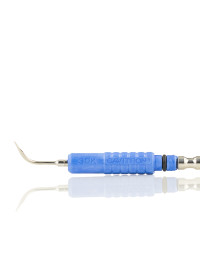
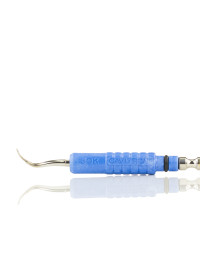
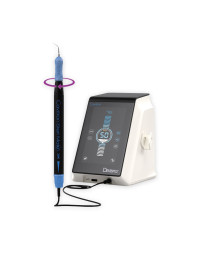
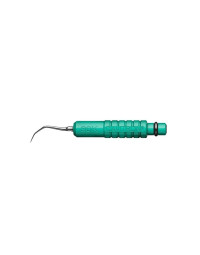
Just as clinicians rely on a variety of hand instruments to address different clinical situations, ultrasonic scaling requires a range of inserts designed to treat different surfaces and areas in the mouth. We offer a broad range of Cavitron® Inserts to meet your clinical needs, whether you’re removing light biofilm, tackling heavy calculus, or navigating complex tooth anatomy.
Manufactured by Dentsply Sirona, Cavitron Inserts are engineered for safety, precision and performance. However, quality instruments require care and maintenance to deliver the best clinical outcomes for your patients. So, let’s explore why caring for your Cavitron Inserts is essential, how good maintenance and correct use of Inserts directly impact your efficiency, patient comfort, and clinical outcomes.

One Insert Doesn’t Fit Every Case
Ultrasonic inserts are designed with specific clinical applications in mind:
- Heavy deposit removal
- Fine finishing and debridement
- Periodontal maintenance
- Accessing tight interproximal areas
- Adapting to varying tooth anatomy
Using the correct insert for the right indication improves effectiveness and reduces operator fatigue. Relying on a single insert for all procedures not only compromises performance but also accelerates wear and reduces the lifespan of your instruments.


The Hidden Cost of Worn Cavitron Inserts
Monitoring insert wear is one of the most overlooked aspects of ultrasonic maintenance, an insert should perform perfectly for 800 cycles, but then you may start to notice a change in performance, like inserts leaking or overheating.
Over time, ultrasonic tips gradually wear, and the working area slowly reduces until the instruments become inactive. This wear may not be obvious at first glance, but it significantly impacts performance.
A worn insert:
- Operates at substandard efficiency.
- Requires higher power settings to achieve results which speeds up tip wear.
- Increases treatment time.
- Reduces patient comfort.
- Causes unnecessary strain on the clinician.
In fact, even a small reduction in tip length can dramatically decrease scaling efficiency, which means that you could be working harder because your Insert tip is starting to wear down.
Why Regular Monitoring of Cavitron Inserts Matters
Routine inspection ensures you:
- Maintain optimal ultrasonic vibration and performance.
- Preserve clinical efficiency.
- Deliver consistent patient outcomes.
- Protect your investment in equipment.
A simple wear check can help determine whether an insert is still performing well or is it time for replacement.
Best Practices for Caring for Your Cavitron Inserts
To extend the life and performance of your Cavitron inserts:
- Rinse thoroughly after each use to remove debris.
- Automatic washing and disinfection using an alkaline detergent with a maximum PH of 10.5 in dilution for washing and thermal disinfection at 90°C - 95°C for one minute.
- Porous load autoclaving at 134°C to 137°C for 3 to 3.5 minutes.
- Keep your inserts free of scale by maintaining your filters and Cavitron unit. Purge the unit before and after each patient and treat the waterlines weekly with a 1:10 Sodium Hypochlorite 5.25% Solution with the following steps.
- Avoid using excessive power, no matter the insert or its level of wear you must adjust the power setting and water dial for each Insert until you see a consistent drip and hue.
- Store inserts on a flat surface and do not lay any heavy items on top of them to avoid bending.
- Only hold an Insert at the handle, not the metal stack. Open the sterilisation pouch very carefully and do not use the Insert tip or stack to pierce the pouch. If an Insert is bent, it must be discarded.
Proper care not only ensures performance but also supports patient safety and clinical excellence.

Best Practices for Caring for Your Cavitron Inserts
To extend the life and performance of your Cavitron inserts:
- Rinse thoroughly after each use to remove debris.
- Automatic washing and disinfection using an alkaline detergent with a maximum PH of 10.5 in dilution for washing and thermal disinfection at 90°C - 95°C for one minute.
- Porous load autoclaving at 134°C to 137°C for 3 to 3.5 minutes.
- Keep your inserts free of scale by maintaining your filters and Cavitron unit. Purge the unit before and after each patient and treat the waterlines weekly with a 1:10 Sodium Hypochlorite 5.25% Solution with the following steps.
- Avoid using excessive power, no matter the insert or its level of wear you must adjust the power setting and water dial for each Insert until you see a consistent drip and hue.
- Store inserts on a flat surface and do not lay any heavy items on top of them to avoid bending.
- Only hold an Insert at the handle, not the metal stack. Open the sterilisation pouch very carefully and do not use the Insert tip or stack to pierce the pouch. If an Insert is bent, it must be discarded.
Proper care not only ensures performance but also supports patient safety and clinical excellence.
Elevate Your Standard of Care
Your ultrasonic system is a powerful tool, but its effectiveness depends on the condition of the insert you’re using. By maintaining a variety of inserts and monitoring wear consistently, you protect both your efficiency and your patients’ experience.
Small changes in maintenance habits can lead to significant improvements in performance.
Ready to Check Your Inserts?
Request a FREE Cavitron Insert Wear Guide today
Because when it comes to ultrasonic scaling, efficiency, patient comfort, compliance and great clinical outcomes are of enormous value to you and your practice.